Men’s T
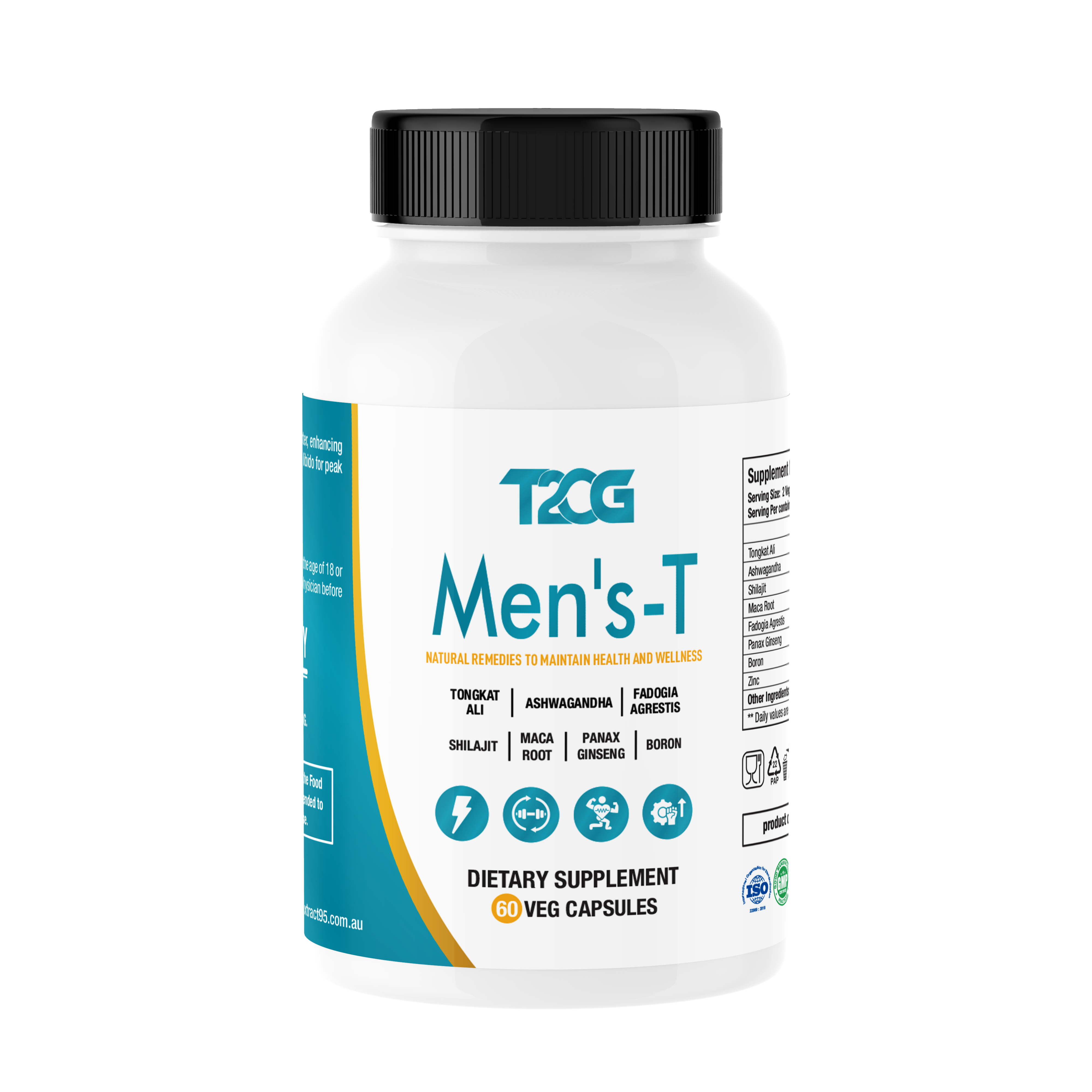
Men’s T is a scientifically formulated dietary supplement designed to support male hormonal balance, enhance vitality, and promote overall well-being. By combining natural ingredients known for their health benefits, Men’s T aims to optimise testosterone levels, improve energy, and enhance physical and mental performance.
This formulation of Men’s T offers a modern solution grounded in traditional practices and supported by scientific research, aiming for enhanced male health and vitality.

Key Ingredients
Tongkat Ali (Eurycoma longifolia):
Tongkat Ali has been used traditionally in Southeast Asian medicine for its aphrodisiac properties. Research suggests it may help increase testosterone levels and improve libido by reducing cortisol levels (Taewoong et al., 2013).
Ashwagandha (Withania somnifera):
As an adaptogen, Ashwagandha has been shown to reduce stress and anxiety, which can adversely affect testosterone production. A study found that it can help increase testosterone levels and improve sperm quality in men (Mahmoud et al., 2019).
Shilajit:
Shilajit is a mineral-rich resin that has been used in Ayurvedic medicine. It is known for its potential to enhance testosterone levels and support energy metabolism as per research highlighting its effects on male fertility and testosterone production (Mishra et al., 2016).
Macaroot (Lepidium meyenii):
Maca root has garnered attention for its ability to boost libido and enhance stamina. Studies indicate that it may support hormonal balance without containing hormones itself, making it a popular choice for improving sexual function (Gonzales et al., 2002).
Fadogia agrestis:
Fadogia agrestis is a lesser-known herb that has been associated with increased testosterone levels in animal studies. While further research is needed in humans, it is believed to promote libido and enhance athletic performance (Zahra et al., 2015).
Panax Ginseng:
Panax ginseng is known for its ability to improve physical performance and reduce fatigue. Some studies suggest that it also plays a role in enhancing testosterone levels, which can lead to improved energy and vitality (Reay et al., 2005).
Boron:
Boron is a trace mineral that has been shown to impact testosterone levels positively. Research indicates that supplemental boron can enhance testosterone and improve bone strength (Nielsen et al., 2009).
Zinc:
Zinc is an essential mineral crucial for numerous biological functions, including testosterone production. Low zinc levels have been linked to decreased testosterone levels, making zinc supplementation beneficial for men looking to support their hormonal health (Prasad, 1995).
Conclusion
Men’s T is designed to harness the synergistic effects of its potent ingredients to promote male health. By targeting various aspects of hormonal balance, energy levels, and sexual health, Men’s T presents a comprehensive solution for men seeking to enhance their vitality and overall well-being. Always consult a healthcare professional before starting any new supplement regimen.
References:
Taewoong, J., et al. (2013). “Eurycoma longifolia Jack: A potential herbal supplement for enhancing testosterone levels.” – Journal of Ethnopharmacology.
Mahmoud, A. et al. (2019). “The efficacy of Withania somnifera in improving semen quality and testosterone levels.”- Reproductive Biology and Endocrinology.
Mishra, L., et al. (2016). “Shilajit: A review on the potential health benefits.” – International Journal of Ayurveda Research.
Gonzales, G. F., et al. (2002). “Nutritional properties of Lepidium meyenii (Maca): A review.” – Nutrition Research Reviews.
Zahra, M.S. et al. (2015). “Effects of Fadogia agrestis on testosterone levels in male rats.” – Journal of Ethnopharmacology.
Reay, J.L., et al. (2005). “Panax ginseng improves mental performance in humans.” – Journal of Psychopharmacology.
Nielsen, F.H., et al. (2009). “Boron and its effects on human health.” – Environmental Health Perspectives.
Prasad, A.S. (1995). “Zinc: Mechanisms of host defense.” – Journal of Nutrition.